Israel – Palestine Peace Plan
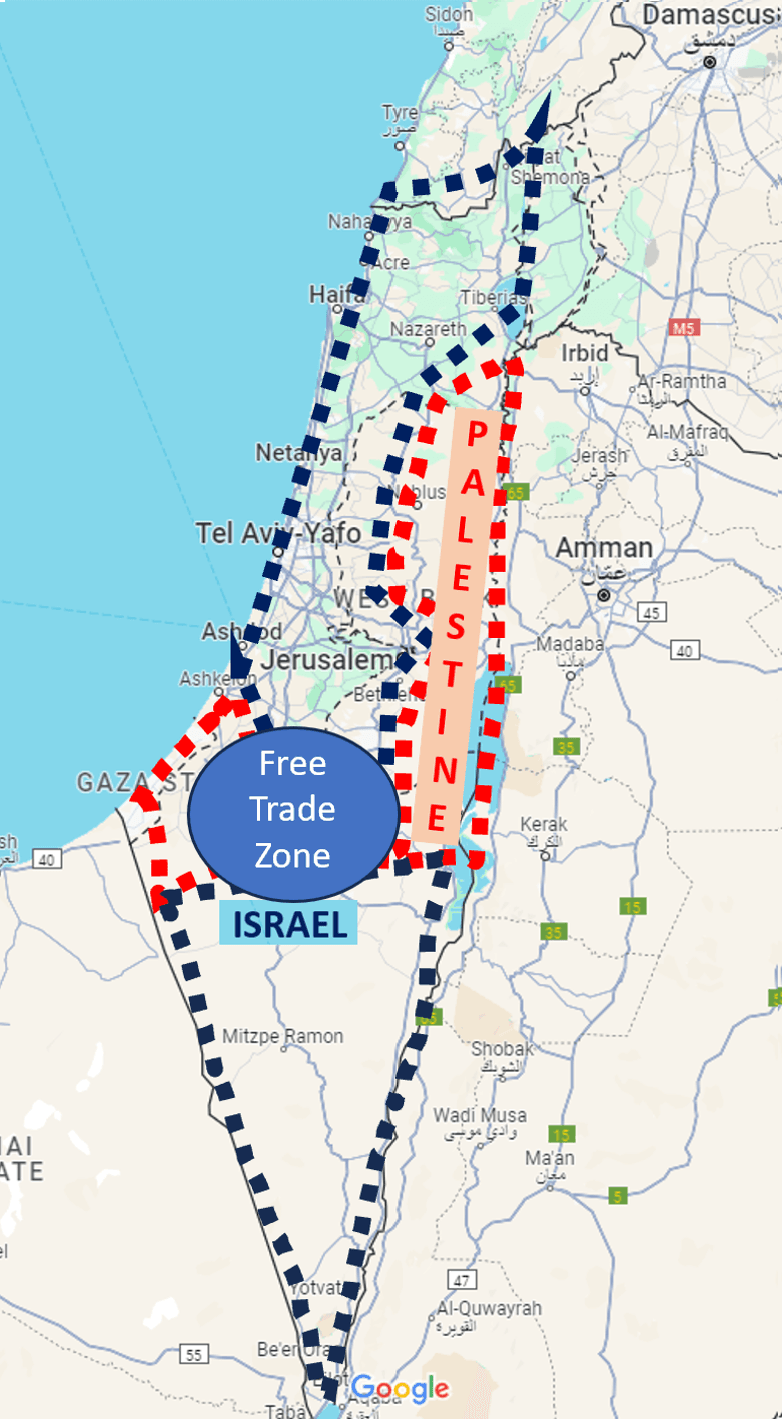
What Israel Gains:
- Iron-Clad Security Guarantee via membership in NATO and the EU.
- Full diplomatic recognition from all 22 Arab League states.
- Restitution and/or repatriation options for up to 800,000 Mizrachi refugees from Arab lands.
What Palestine Gains:
- Independent sovereign state in the West Bank and Gaza.
- Restitution and/or repatriation of up to 750,000 Palestinian refugees.
Mutual Benefits:
- Comprehensive Peace Treaty.
- Preservation of residence: 99% of inhabitants may remain in place.
- Jews in Palestine and Palestinians in Israel are citizens of their countries of residence, with the option of dual nationality.
Additional Provisions:
- Contingent on approval by voter referendum in Israel and Palestine.
Rationale
The tragic events of October 7, 2023, and the devastating consequences of the Gaza war compel all parties involved in the century-long Israeli - Palestinian conflict to deeply reconsider the path forward. These moments underscore the urgency of pursuing a future rooted in justice, dignity, and lasting peace.
For the State of Israel and its founding Zionist vision, this is a critical juncture to both acknowledge the nation’s profound achievements since 1948 and to engage in thoughtful reflection regarding past missteps and ongoing challenges. Durable security cannot be achieved through borders alone; a sustainable peace will require genuine engagement and a negotiated settlement with the Palestinian people.
Likewise, it is imperative that a parallel process of introspection and strategic revision occur among Palestinians. As both communities look toward a shared future, historical narratives— though vital to identity and understanding—must inform rather than constrain the pursuit of a resolution that reflects the realities and possibilities of today.
Recognizing the complexity and nuance of historical truth, the following points represent our perspective on the essential contours of the conflict:
- Historical Continuity: The peoples of Israel and Palestine are descendants of those who have lived in the region for millennia. Israeli Jews and Palestinian Arabs each possess a historic connection to the land and a legitimate right to live there.
- Continuity and Dispersion: Jewish presence originated at least 2,000 years ago. Though significantly diminished through exile and migration, never entirely ceased and was later renewed through return movements. Arabs have resided continuously in the region since at least the 7th century CE.
- Diaspora Experience: The Jewish diaspora brought cultural enrichment, education, and economic contributions to host societies—but also exposed Jews to profound suffering through expulsions, pogroms and ultimately the Holocaust.
- Zionist Aspirations: Zionism reflects both a historical and a practical necessity for a secure homeland free from systemic persecution.
- Legal Foundations: Early Zionist settlement efforts in Palestine were conducted within the frameworks of international law, including legitimate land acquisition under prevailing legal authorities.
- Partition Disparities: The 1947 United Nations Partition Plan – which was boycotted by the Arab leadership - allocated disproportionate territory to the Jewish minority, failing to reflect demographic realities.
- 1948 Displacement: The displacement of approximately 750,000 Palestinian Arabs following the 1948 conflict remains a deeply painful historical event for which multiple actors — including the UN, the British government, the Zionist movement, Arab states, and Palestinian leadership — share responsibility.
- Regional Recognition: Diplomatic recognition of Israel by Egypt, Jordan, the UAE, Morocco, and other Arab nations affirms the possibility of peaceful coexistence and challenges the notion that Arab hostility is monolithic or unchanging.
- Framework for Peace: The contours of a viable peace agreement should be developed collaboratively by representatives of Israel, Palestine, NATO, Jordan, and Egypt as well as other affected nations.
- Democratic Legitimacy: Final adoption of any peace accord should be subject to referendums in both Israel and Palestine, ensuring that the agreement reflects the will of the people.